Configuration as Code
Set and manage your Ansible Automation Platform Controller with configuration files
Abstract
Providing feedback on Red Hat documentation
If you have a suggestion to improve this documentation, or find an error, you can contact technical support at https://access.redhat.com to open a request.
Chapter 1. Setting up your automation environment for Configuration as Code
Configuration as Code is a way of working where you define and manage the configuration of the Ansible Automation Platform itself using the version-controlled configuration files (such as YAML, or JSON), instead of clicking through the web UI.
As an Ansible content developer, you can use the Configuration as Code approach to apply settings on your automation controller to get the following benefits:
- Predictable job behavior
- Easier and faster scaling to new clusters
- Change history with diffs and rollback capability thanks to version control support
- Faster recovery after outages or migrations
- Reduced risk of errors because changes flow through CI/CD pipelines and pull requests, where peer reviews and automated testing are applied
Prerequisites
- You have a Git account.
- Your platform gateway instance is accessible.
-
You built and registered your own execution environment. Alternatively, you have available the supported execution environment to run playbooks that use the
ansible.platformcollection. For more information, see Creating and using execution environments.
Procedure
- Create a new Git repository.
On your local machine, encrypt your password for platform gateway:
$ ansible-vault encrypt_string '<gateway_password>' --name 'aap_password'
New Vault password: <vault_password>
Confirm New Vault password: <vault_password>
Encryption successful
aap_password: !vault |
          $ANSIBLE_VAULT;1.1;AES256
          63633763653530343566363864333130656433613634333465363733326261336465333362623635
          3061333439626238616332313663633431663962353735320a633732346232396165373931653039
          64326462306162396366373565316631343033656230363038623237313036613166313331623533
          3363636462646534330a616437646665393738386235306361653333313338656563346633396434
          35346164656437326231326433323934643133353436323562373762616531326463
You encrypted the value of the
aap_passwordvariable, which you will use in the next step.Create the
/my_ansible_project/vars/all.ymlfile with variables for connecting to your Ansible Automation Platform and variables for creating Role-Based Access Control (RBAC) objects:--- # Ansible Automation Platform related variables aap_hostname: "<GATEWAY>" aap_username: "<GATEWAY_USER>" aap_password: !vault | $ANSIBLE_VAULT;1.1;AES256 63633763653530343566363864333130656433613634333465363733326261336465333362623635 3061333439626238616332313663633431663962353735320a633732346232396165373931653039 64326462306162396366373565316631343033656230363038623237313036613166313331623533 3363636462646534330a616437646665393738386235306361653333313338656563346633396434 35346164656437326231326433323934643133353436323562373762616531326463 aap_validate_certs: false # Details for creating organization, team, and user org_name: "Demo-Organization" team_name: "Demo-Team" user_username: "Demo-User" user_email: "demo.user@example.com" user_password: "3ncrypt3d_P@$$word" # Role names as they exist in your Ansible Automation Platform role_for_team_in_org: "Organization Inventory Admin" # "Executor" role_for_user_in_org: "Organization Auditor" role_for_user_in_team: "Auditor" # if your platform supports team-scoped roles # Custom role definition details custom_role_name: "NetOps ReadOnly" custom_role_description: "Read-only access to network objects"Compose the
/my_ansible_project/RBAC_settings.ymlplaybook, which creates RBAC objects and assigns roles to those objects:--- - name: Create RBAC objects and assign roles to them hosts: localhost gather_facts: false vars_files: - ./vars/all.yml tasks: - name: Ensure new organization exists ansible.platform.organization: name: "{{ org_name }}" state: present aap_hostname: "{{ aap_hostname }}" aap_username: "{{ aap_username }}" aap_password: "{{ aap_password }}" aap_validate_certs: "{{ aap_validate_certs }}" - name: Ensure new team exists in organization ansible.platform.team: name: "{{ team_name }}" organization: "{{ org_name }}" state: present aap_hostname: "{{ aap_hostname }}" aap_username: "{{ aap_username }}" aap_password: "{{ aap_password }}" aap_validate_certs: "{{ aap_validate_certs }}" - name: Ensure new user exists ansible.platform.user: username: "{{ user_username }}" email: "{{ user_email }}" password: "{{ user_password }}" state: present aap_hostname: "{{ aap_hostname }}" aap_username: "{{ aap_username }}" aap_password: "{{ aap_password }}" aap_validate_certs: "{{ aap_validate_certs }}" - name: Ensure new custom role exists ansible.platform.role_definition: name: "{{ custom_role_name }}" description: "{{ custom_role_description }}" content_type: awx.inventory permissions: - awx.view_inventory - awx.change_inventory state: present aap_hostname: "{{ aap_hostname }}" aap_username: "{{ aap_username }}" aap_password: "{{ aap_password }}" aap_validate_certs: "{{ aap_validate_certs }}" - name: Assign already existing role to team in organization ansible.platform.role_team_assignment: team: "{{ team_name }}" assignment_objects: - name: "{{ org_name }}" type: "organizations" role_definition: "{{ role_for_team_in_org }}" state: present aap_hostname: "{{ aap_hostname }}" aap_username: "{{ aap_username }}" aap_password: "{{ aap_password }}" aap_validate_certs: "{{ aap_validate_certs }}" - name: Assign already existing role to user in organization ansible.platform.role_user_assignment: user: "{{ user_username }}" object_ids: - "{{ org_name }}" role_definition: "{{ role_for_user_in_org }}" state: present aap_hostname: "{{ aap_hostname }}" aap_username: "{{ aap_username }}" aap_password: "{{ aap_password }}" aap_validate_certs: "{{ aap_validate_certs }}"Many values in this playbook are provided in the form of variables, such as object names, their details, Ansible Automation Platform credentials. You can easily reuse the variables throughout files in your Ansible project, which will also simplify the creation and maintenance of the project and reduce the number of errors.
Refer to the
all.ymlfile to see the expanded values of those variables. For details about the module parameters, default values, and further examples how to use the modules, see the resources on Automation hub for the This content is not included.ansible.platform collection.Push the variables and the playbook to your Git repository so that the automation controller can later read in the correct data.
git add .
git commit -m "Provide variables and RBAC_settings.yml playbook resources for Ansible Automation Platform project"
git push origin _<relevant_branch_name>_
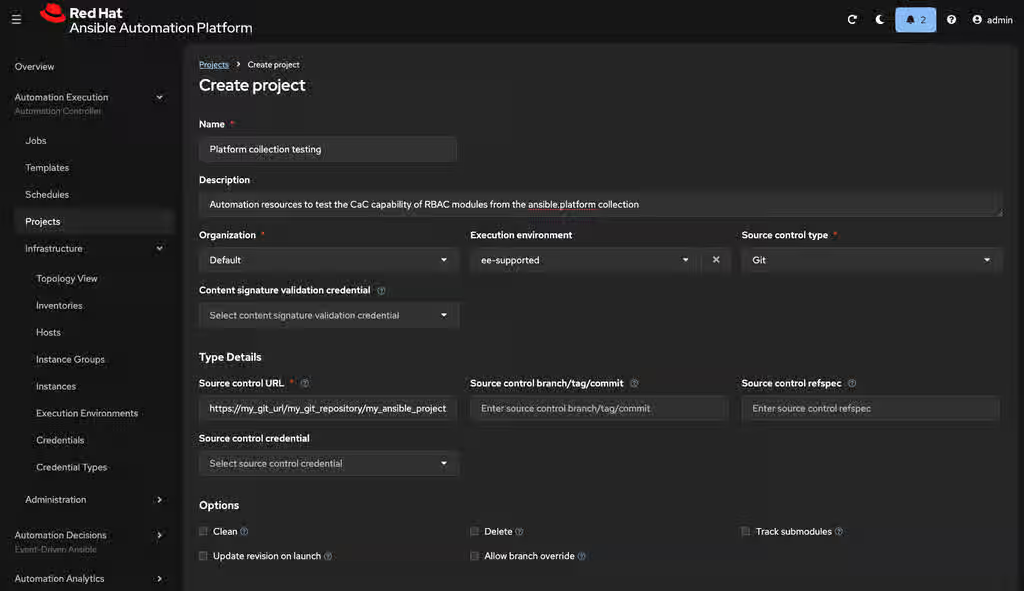
Using the platform gateway UI, create a new project with the following values:
- Name: Platform collection testing
-
Description: Automation resources to test the CaC capability of RBAC modules from the
ansible.platformcollection -
Execution Environment:
ee-supported - Organization: Default
- Source Control Type: Git
Source Control URL: https://my_git_url/my_git_repository/my_ansible_project
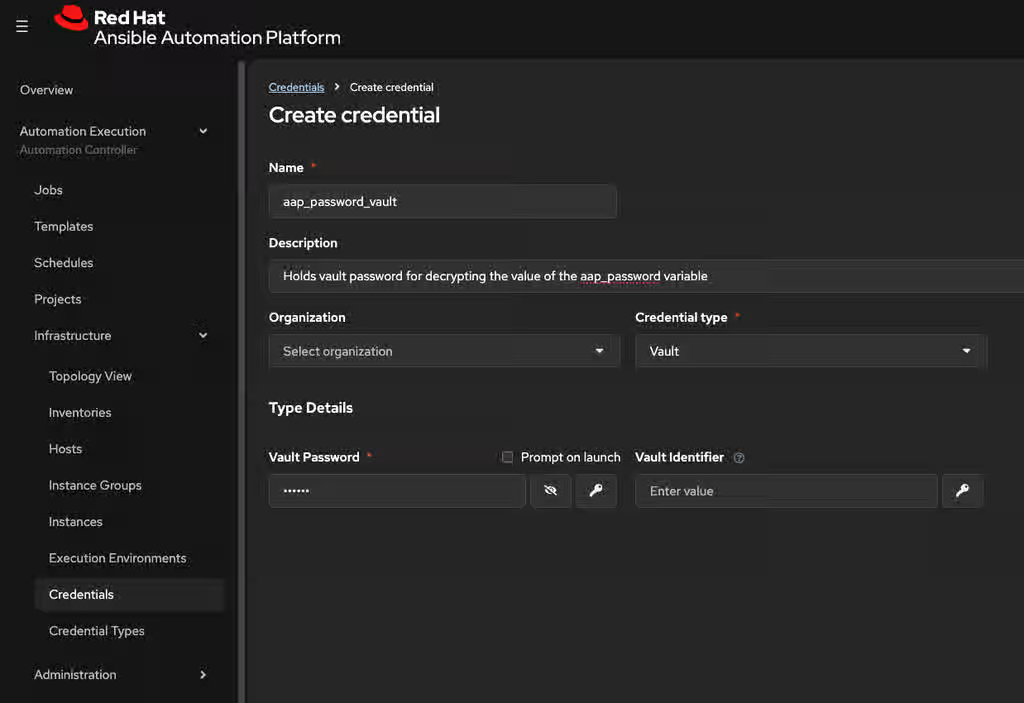
Create a credential for your Ansible Vault password of your encrypted
aap_passwordvariable:- Name: aap_password_vault
-
Description: Holds vault password for decrypting the value of the
aap_passwordvariable - Credential type: Vault
Vault Password: <vault_password>
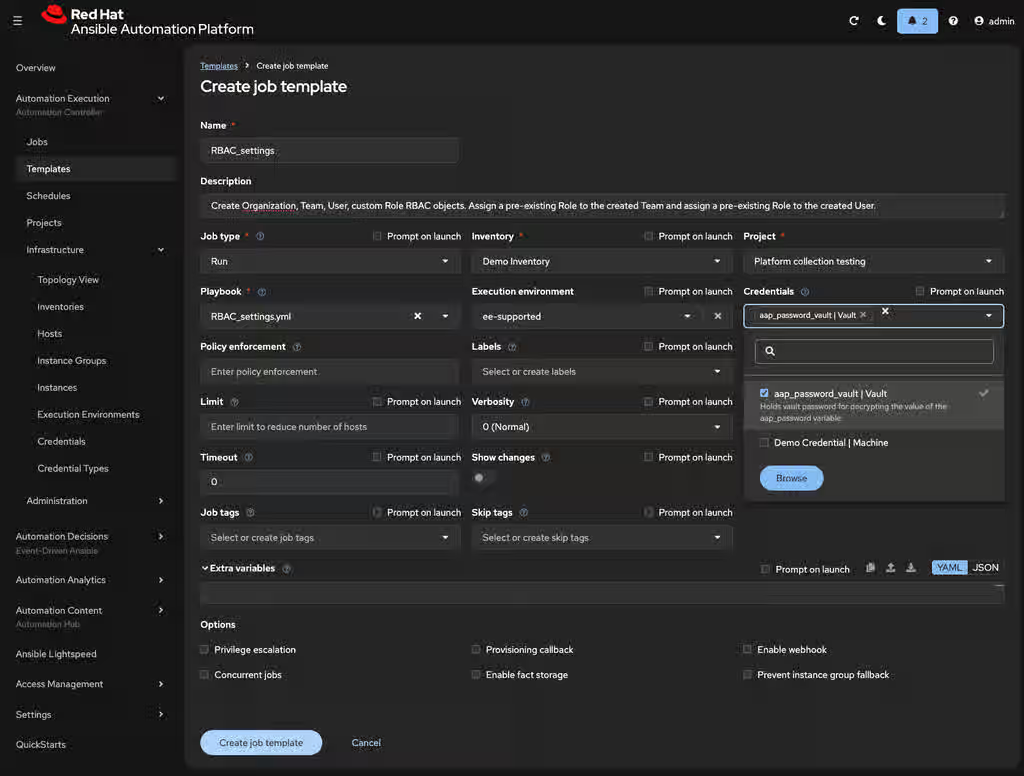
Create a job template with the following values:
- Name: RBAC_settings
- Description: Create organization, team, user, and custom role RBAC objects. Assign a pre-existing role to the created team and assign a pre-existing role to the created user.
- Job type: Run
- Inventory: Demo Inventory
- Project: Platform collection testing
-
Playbook:
RBAC_settings.yml -
Execution Environment:
ee-supported Credentials: aap_password_vault | Vault
Launch the
RBAC_settingsjob template. After the template job successfully finishes, the output should be similar to the following:Vault password: [WARNING]: Collection ansible.platform does not support Ansible version 2.15.13 PLAY [Create organization] ***************************************************** TASK [Ensure new organization exists] ****************************************** changed: [localhost] PLAY [Create team] ************************************************************* TASK [Ensure new team exists in organization] ********************************** changed: [localhost] PLAY [Create user] ************************************************************* TASK [Ensure new user exists] ************************************************** changed: [localhost] PLAY [Create custom role] ****************************************************** TASK [Ensure new custom role exists] ******************************************* changed: [localhost] PLAY [Team gets role] ********************************************************** TASK [Assign already existing role to team in organization] ******************** changed: [localhost] PLAY [User gets role] ********************************************************** TASK [Assign already existing role to user in organization] ******************** changed: [localhost] PLAY RECAP ********************************************************************* localhost: ok=6 changed=6 unreachable=0 failed=0 skipped=0 rescued=0 ignored=0
The output message shows that you ran the job template against 1 target (your localhost). At the same time, you created:
- An organization.
- A team that exists within the created organization. The team was assigned some pre-existing role.
- A user that exists within the created organization. The user was assigned some pre-existing role.
- A custom role.
Verification
In the navigation panel, check that you see your created organization:
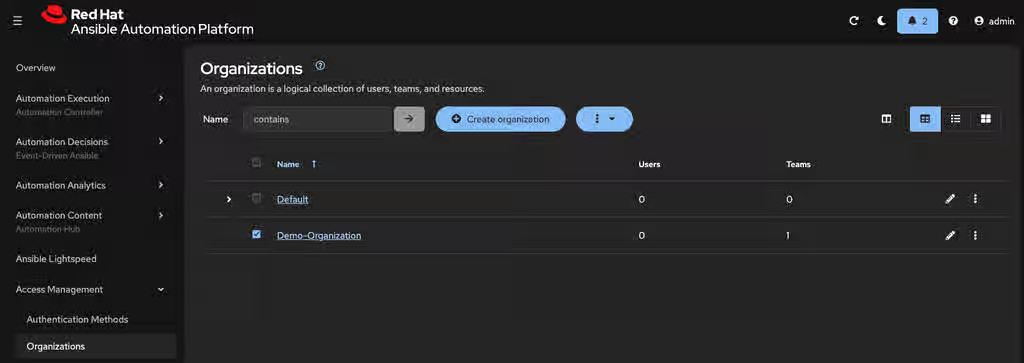
Check that you see your created team, which belongs to the organization and is assigned the correct pre-existing role:
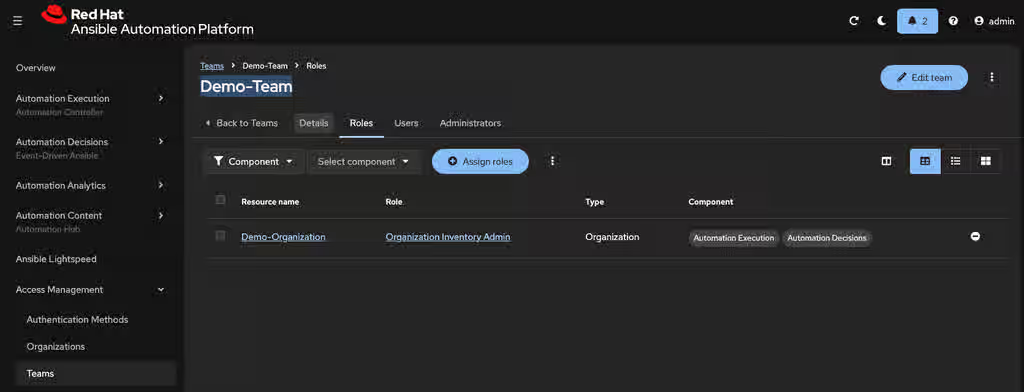
Check that you see your created user, which belongs to the organization and is assigned the correct pre-existing role:
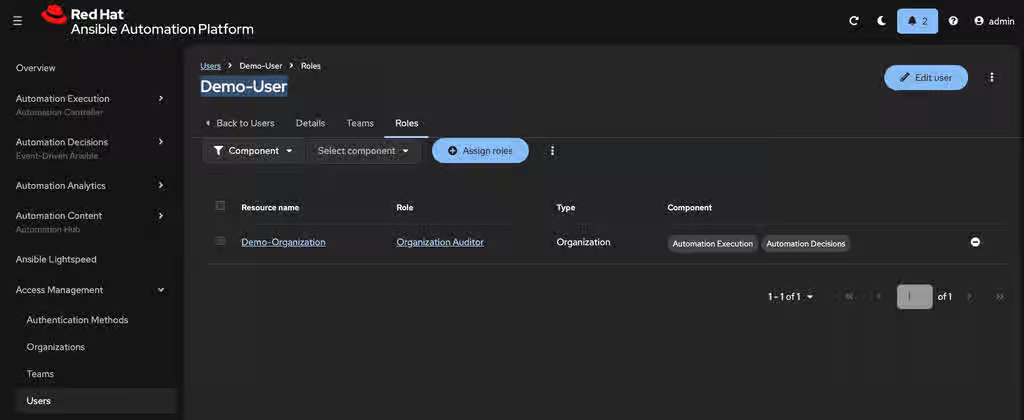
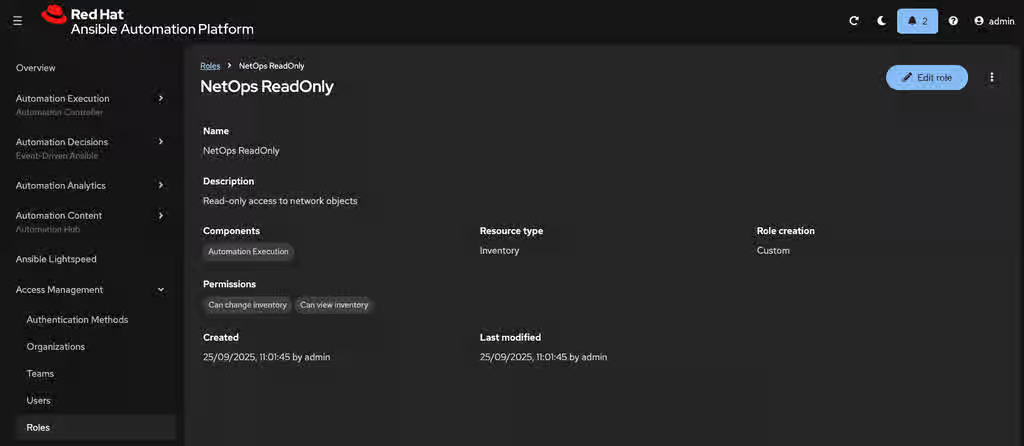
Check that you see your created custom role, which was assigned the permissions as specified in your
RBAC_settings.ymlplaybook: